School Programs
Let's Slow Climate Change
It’s the littlest ones who sometimes make the biggest difference
Conservation Works is working to increase resilience to droughts, floods, and wildfires while enhancing the health of our soil watersheds and ecosystems. We currently see a swiftly closing window of time to act to address climate change and working together with kids at schools our community can multiply the impact of our actions. Small changes cumulatively make for big impact.
Climate Change & Resiliency
Conservation Works Waste Wizards Composting Program

Climate Action
Here at Conservation Works, we are taking action with nature-based solutions to climate change by reducing greenhouse gas emissions and increasing landscape resilience.
Addressing Food Waste
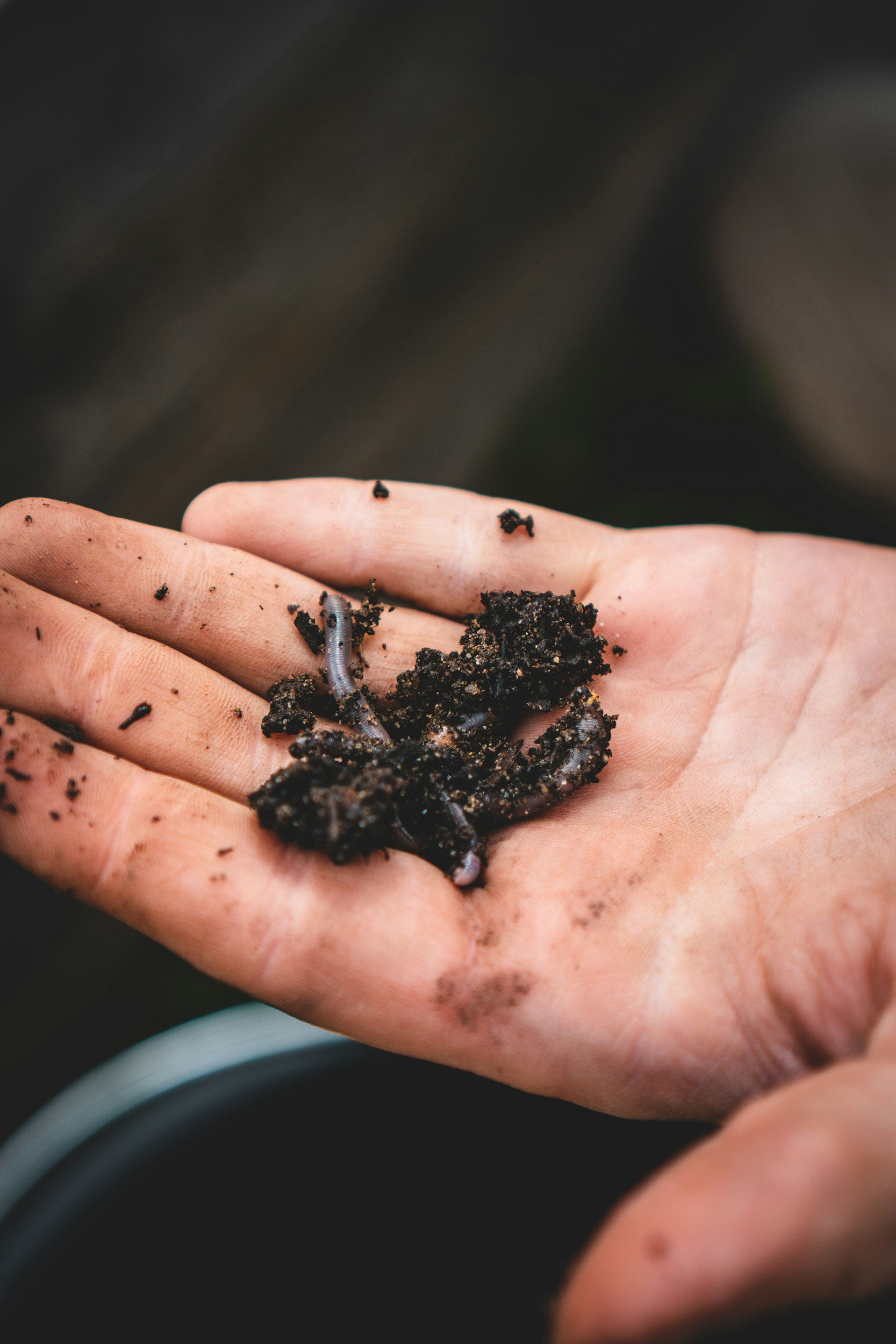
Our Waste Wizards program increases recycling literacy and helps schools divert school food waste from landfills through campus-wide composting programs. Food waste in landfills is the single most influential human caused source of methane gas production in the nation. Stopping methane emissions will allow cooling to follow within a decade, not the centuries it would take to see results from our current mandates for reducing carbon dioxide emissions.
School institutions are one of the largest groups that produces daily waste, with as much as 50% of this waste able to be recycled or turned into compost.
Contact us for more information.
Protecting Ecosystems
Our ecosystem restoration projects protect land and ecosystems, which stop activities that release carbon from vegetation and soil before they start.
Supporting Climate Smart Agriculture Practices
Conservation Works’ North Coast Farm Workshop Series provides farmers with education and resources to implement climate-smart agriculture practices.
Fire Resiliency

Fire Resiliency
Here at Conservation Works, we are taking action with nature-based solutions to increase landscape resilience. We do this through implementing innovative resiliency projects and collaborating with partners.
Reducing Fire Hazards with Nature-Based Solutions
Turkey Tail Project for Brush Control
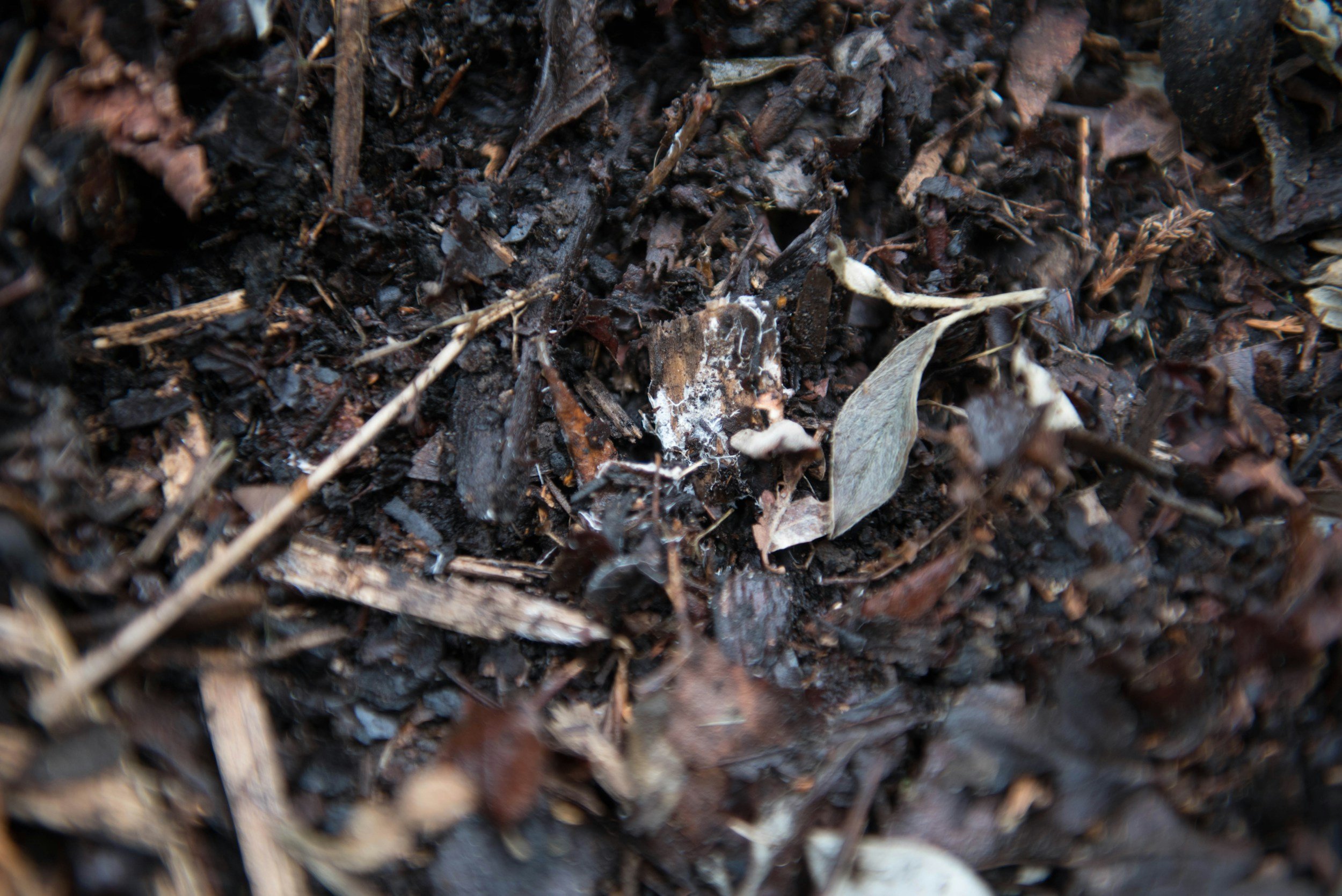
Conservation Works is evaluating an alternative method for brush control in our forests using native turkey tail mushrooms. Controlling forest re-sprouting of brushy tanoaks after logging is frequently a standard practice as part of reforestation to comply with the California Forest Practice Rules and reduce the fire hazard of heavy brushlands. The traditional approach has generally been some combination of herbicidal treatments to control hardwood species, but concerns have been raised about leaving dead brushy species which could serve as more flammable understory vegetation; changing management practices are considering alternatives like the use of inoculating stumps with native mushrooms to slow resprouting instead of herbicide use.
Community Wildfire Planning with Gold Ridge Resource Conservation District
In 2019 Conservation Works partnered with Cal Fire and Gold Ridge Resource Conservation District (Gold Ridge RCD) as a fiscal sponsor to support the development of a Community Wildfire Protection Plan (CWPP) and public education on fire safety and community resiliency best practices for the community of Camp Meeker, a wildland-urban interface community in the coastal redwood forest of western Sonoma County.
Visit Gold Ridge Resource Conservation District’s website to learn more about their impactful fire resiliency projects.
Mendocino Kids Fire Smart
It’s time to get Fire Smart! In collaboration with California Fire Foundation, and with guidance from Mendocino Fire Safe Council, Conservation works is bringing wildfire resilience education to Mendocino County K-8 Students!
Our goal is to give students the necessary framework to understand wildfire and what it means to be resilient in the face of it. We talk about the causes, how climate change interacts with it, and mitigation efforts through an interactive game. It is an open space to talk about fire, our fears, and how we can join our community in keeping each other safe.
With our funding, we were also able to offer a Grazing for Wildfire workshop, where we demonstrated grazing animals eating vegetation with a grazing expert to talk about how useful they are! Here we learned one of the best mitigation efforts for wildfire while building community
The curriculum for this lesson has been adapted and inspired by Mendocino Fire Safe Council “Fire Science” lessons. For resources associated with this lesson, please visit this lesson on our Resources page.

Watershed Education
Watershed Education
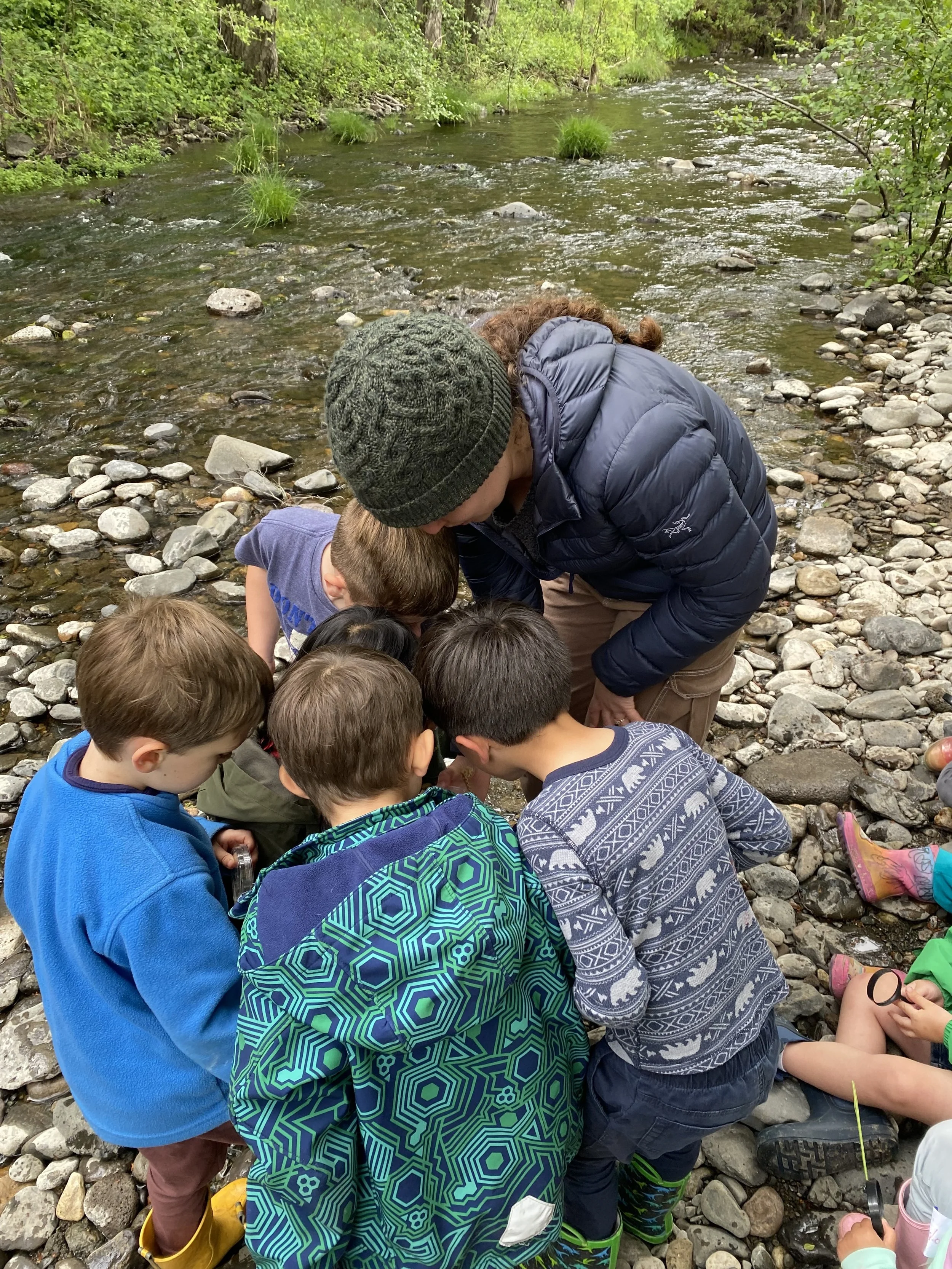
Here at Conservation Works, we are taking action with education and nature-based solutions to increase resiliency across watersheds. We do this by partnering with schools to bring hands-on watershed based curriculum to youth ages TK-8th grade.
Kids Creek Care Programs
Our Kids Creek Care programs always have one main focus: protecting our creeks. We design curriculum, oftentimes with partners such as Envirichment, with place based knowledge in mind. If a school is not nearby a creek, we bring the creek the them through exploratory lessons that engage students in tangible activities they’ll remember forever.
We offer lessons like tracking pollution through a 3D model, building rainwater harvesting system models, water quality sampling and macro-invertebrate identification. We get students to think about how they can shape their own habits to become water protectors and work toward building a brighter future for every living being (not only humans).
Our curriculum is taught by Conservation Works’ Staff and Climate Action Corps Fellows and is adapted to fit the needs of the students and/or school we are working with. Our curriculum is available to the public and can be access via the links below or by contacting us.
Interested in having watershed education brought to your school? Contact us!
.