

Saving the Behren's Silverspot Butterfly
An Extraordinary Conservation Effort on the Mendocino Coast
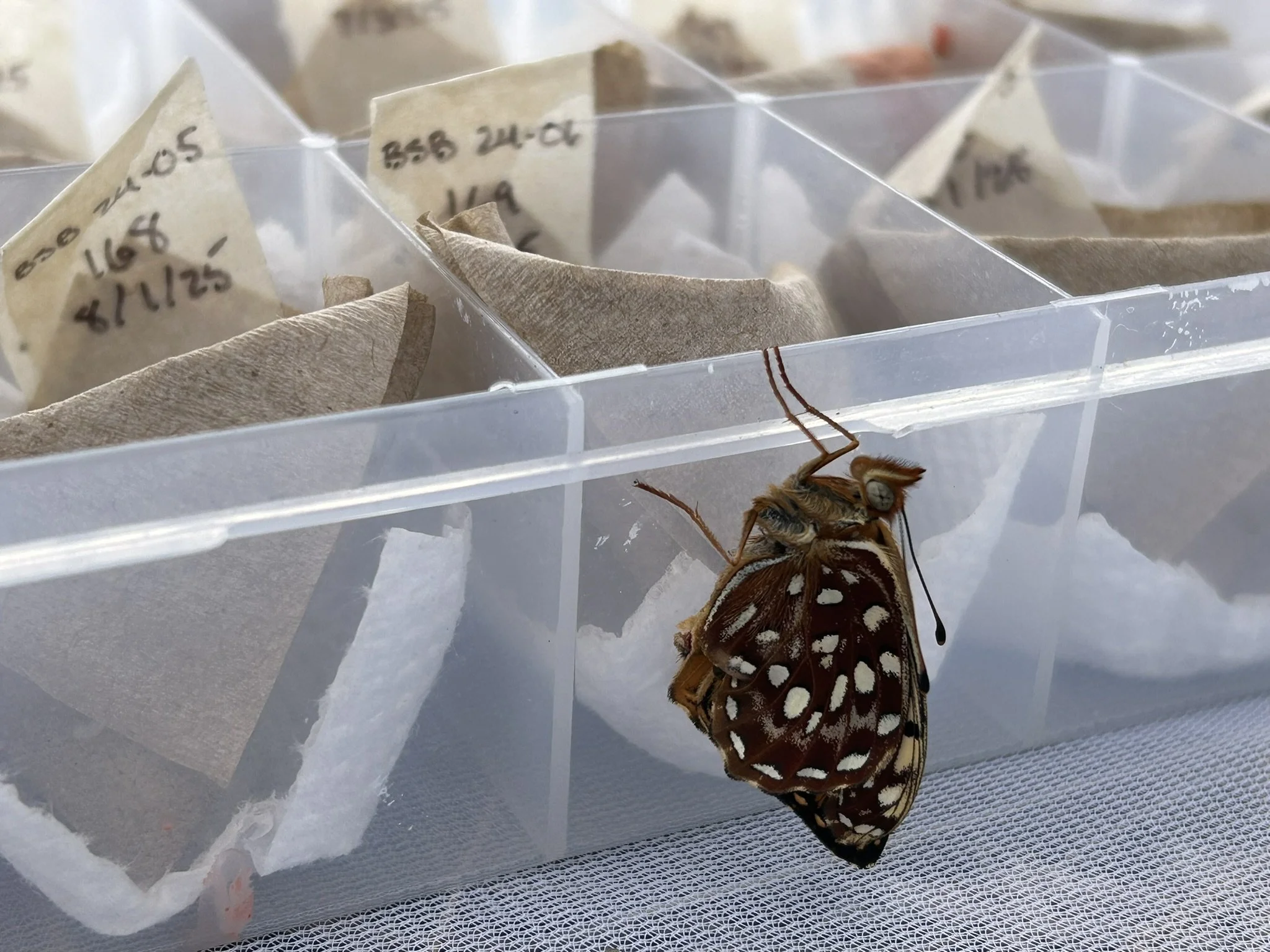
Along the windswept coastal prairies of Mendocino and Sonoma counties lives one of California's rarest butterflies. With brilliant orange wings marked by black patterns and delicate silver spots beneath, the Behren's silverspot butterfly was once a familiar part of this coastal landscape. Today, it is federally endangered, and its survival depends on a remarkable collaboration of scientists, conservationists, and land stewards.
At Conservation Works, we're helping give this beautiful butterfly a future.
From Tiny Eggs to Butterflies in the Wild
Through our endangered butterfly recovery work, Conservation Works supports a highly specialized captive rearing program, working alongside the U.S. Fish and Wildlife Service, Sequoia Park Zoo, and other conservation partners.
The process is extraordinary. Eggs are carefully collected and tended under controlled conditions. Once hatched, the tiny caterpillars depend on native violets for food. After months of careful monitoring and development, they transform into pupae and, eventually, adult butterflies.
In 2025, our collaborative recovery efforts achieved encouraging results:
187 pupae placed in coastal habitat
314 adult butterflies released
894 eggs produced
264 larvae hatched
These accomplishments represent important steps in a long and scientifically challenging recovery effort.
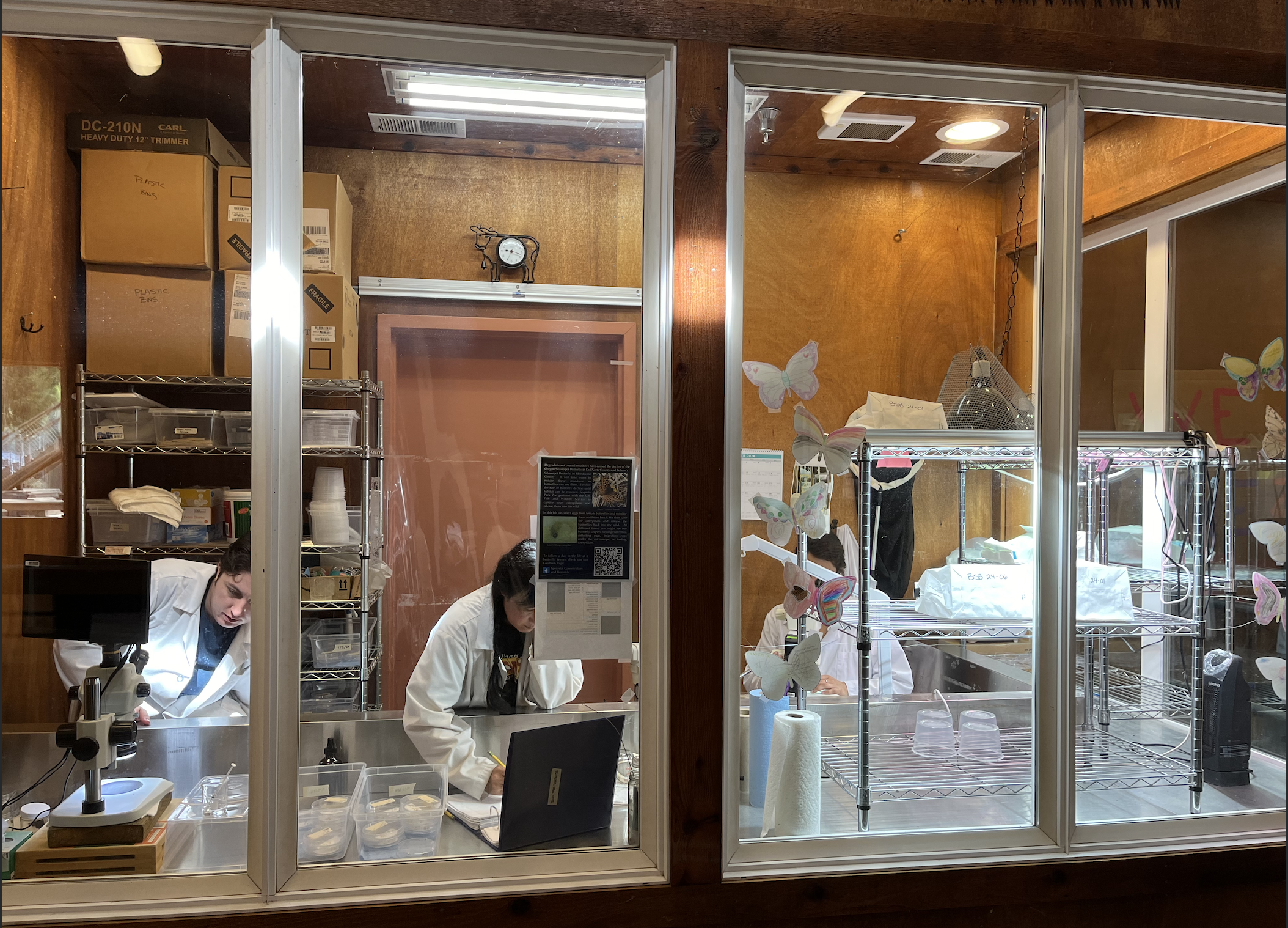
Behind the scenes of butterfly recovery: Butterfly Lab Lead Dr. Christine Damiani and laboratory technicians at Sequoia Park Zoo work to support the recovery of the endangered Behren's silverspot butterfly through careful captive rearing, monitoring, and research. Each stage of the butterfly's delicate life cycle requires extraordinary attention and care.
Restoring the Habitat They Need
Protecting the butterfly means protecting its habitat.
Behren's silverspot butterflies depend on coastal prairie ecosystems, where native violets provide essential food for developing caterpillars and flowering plants provide nectar for adults.
Conservation partners are restoring these increasingly rare habitats by expanding native plant populations, improving prairie conditions, and preparing suitable areas for future butterfly populations.
Our work brings together captive rearing, field monitoring, habitat restoration, and ongoing scientific learning. Each season brings new information that helps guide the next steps in recovery.
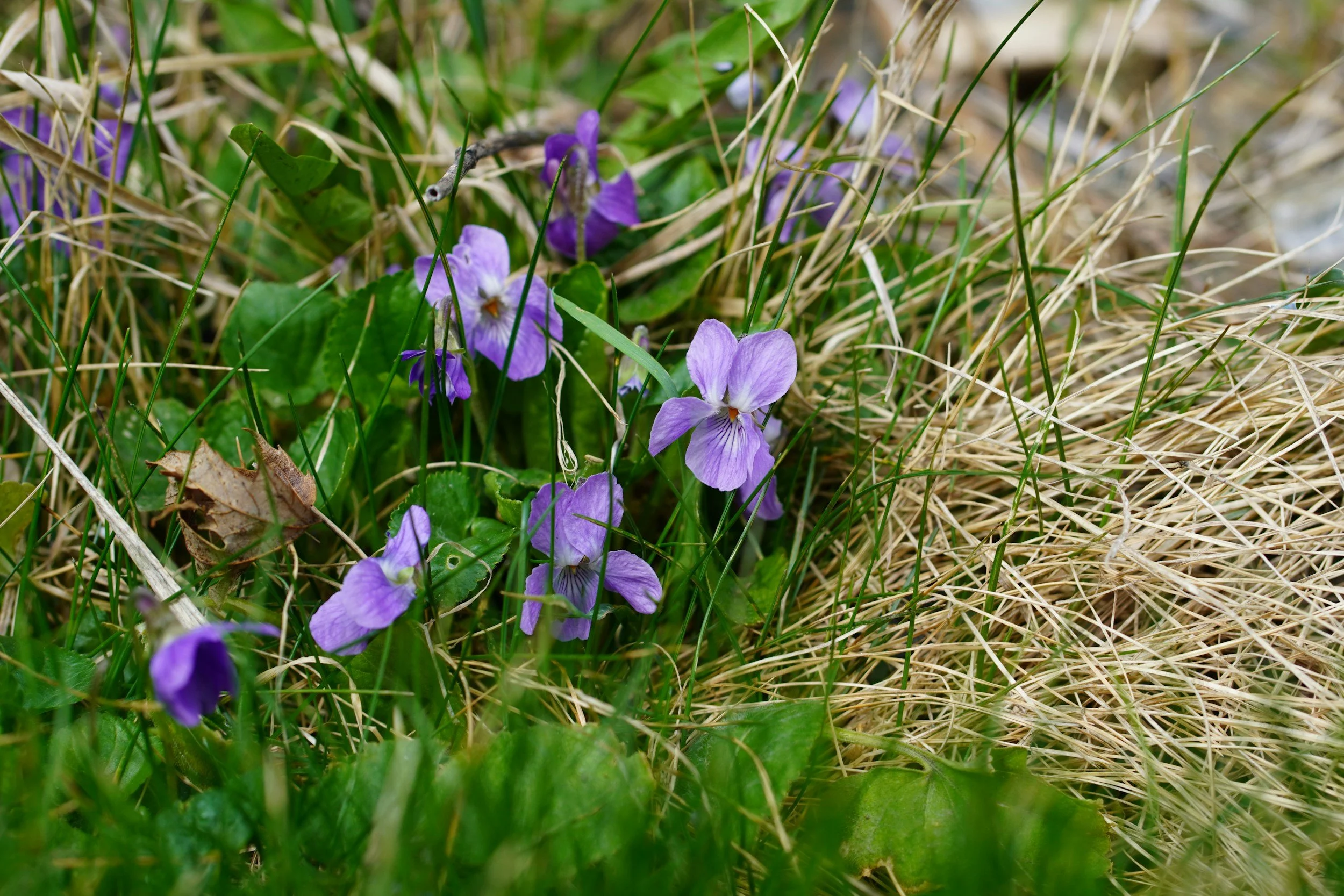
Early blue violet (Viola adunca) is the essential host plant for the endangered Behren's silverspot butterfly. Female butterflies lay their eggs near these native violets, whose leaves provide vital food for developing caterpillars. Protecting and restoring violet populations is a critical part of the butterfly's recovery.
The Work Continues
As we move through the 2026 field season, our team continues to adapt its methods in response to the challenges of recovering a species with such a small remaining population. Successful reproduction in captivity depends on finding fertile females, making each breeding season particularly important.
Recovery will take persistence, scientific collaboration, and years of dedicated habitat stewardship. But every egg, every caterpillar, and every restored patch of coastal prairie represents an investment in the future of this extraordinary species.
Together, we're working to ensure that the Behren's silverspot butterfly remains part of California's coastal landscape for generations to come.